How Much Does Roof Repair Cost in Northern Virginia?
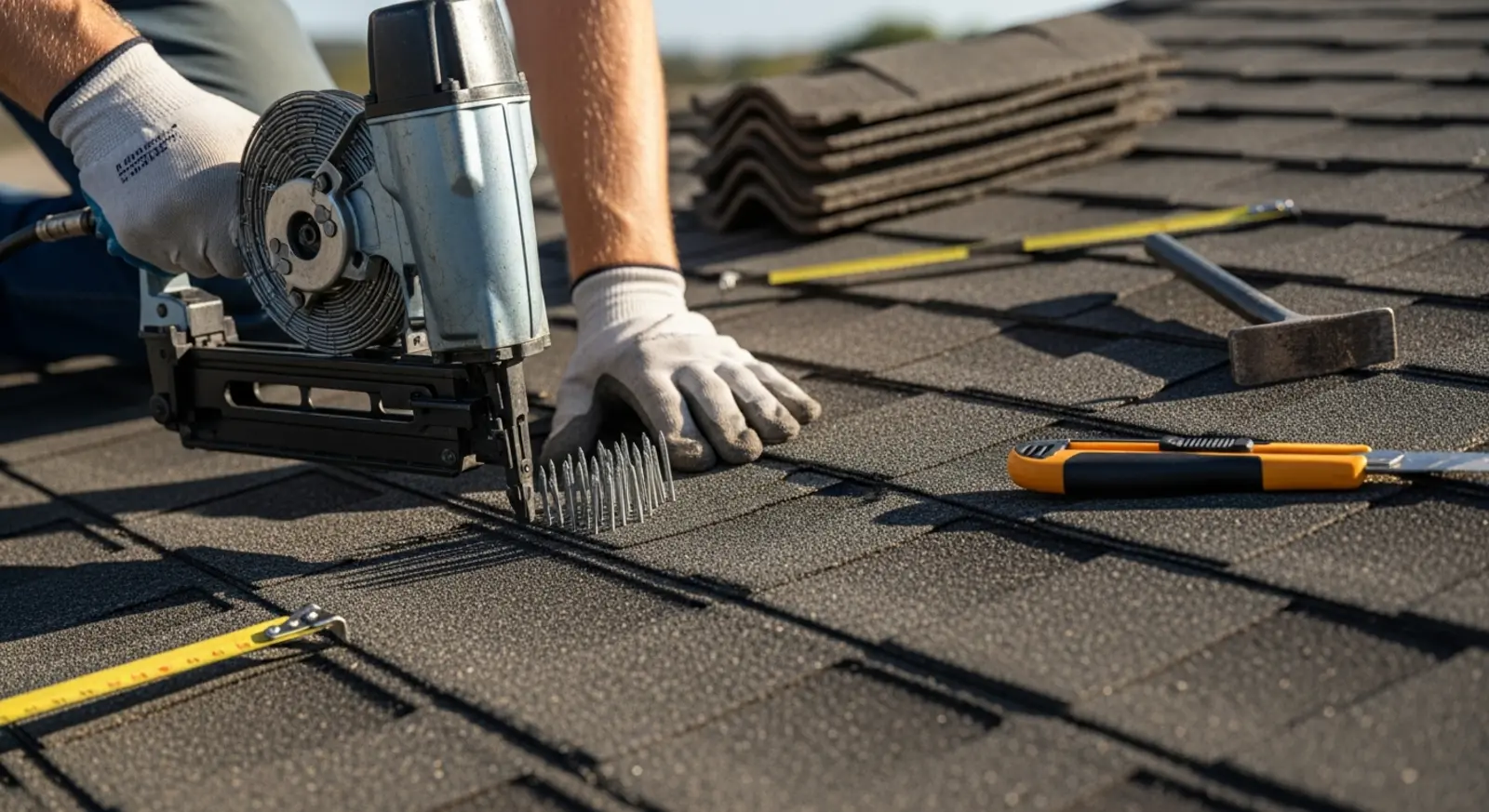
Most Northern Virginia roof repairs run $250–$1,500 in 2026. A minor leak repair — failed pipe boot, small flashing gap, a handful of blown shingles — starts around $250. Valley and major flashing repairs typically run $500–$1,500. Structural repairs involving sagging decking can reach $7,000. These are typical Northern Virginia ranges; your final cost is confirmed at an inspection.
2026 REPAIR PRICING
Roof Repair Prices by Problem (2026)
The ranges below come directly from current Northern Virginia market data. Every repair is different — access difficulty, material availability, and hidden damage all affect the final number — but these figures cover the vast majority of standard residential repair work in the region. Use them for early budget planning; get a written estimate before committing.
| Repair | Typical Range | Usually Done In |
|---|---|---|
| Pipe boot / minor leak | $250–$700 | Same day |
| Flashing repair | $300–$1,200 | Same day |
| Shingle section replacement | $350–$1,200 | 1 day |
| Valley repair | $500–$1,500 | 1 day |
| Structural / sagging section | $1,500–$7,000 | 1–2 days |
| Emergency tarp-off | $300–$800 | Same day |
Typical Northern Virginia ranges for planning purposes only. Final pricing confirmed at your free inspection. Prices vary with roof pitch, access, material availability, and decking condition discovered at tear-off.
HIDDEN COSTS
What Makes a “Small” Repair Get Expensive
A quote for a minor leak can grow once work begins. Understanding the four most common reasons helps you plan for surprises.
Hidden decking rot. Water that enters through a failed pipe boot or loose flashing doesn't stay where you can see it. It migrates along the roof deck, saturating plywood or OSB that looks fine from the attic until a crew pulls the shingles back. Replacing damaged decking runs $70–$120 per 4×8 sheet installed — a small repair involving two or three sheets is modest, but a section that has been leaking for years can require ten or more. The decking condition is genuinely unknowable until the old material is removed.
Water traveling from the entry point. The spot where water shows up on your ceiling is almost never directly below where it entered the roof. Water runs along rafters, pools at low points, and can travel six to ten feet before dripping through. A crew diagnosing a repair has to find the actual entry point, which is often a different part of the roof entirely. Misidentifying the entry point is the most common reason a repair fails and you're calling again three months later.
Matching discontinued shingles. Manufacturers change color lines regularly. A shingle installed five years ago may no longer be in production. When a close match isn't available, a crew may need to replace a larger section — potentially a whole slope — to achieve an acceptable visual result. Always ask the contractor to bring a shingle sample before the repair day so you can approve the match.
Chimney and skylight complexity. These penetrations involve multiple flashing pieces, counter-flashing embedded in masonry, and often caulking that has to be removed and replaced. Both take longer to repair correctly than a simple shingle or pipe-boot job. A chimney flashing repair at the high end of the flashing range reflects this added complexity.
REPAIR OR REPLACE?
Repair or Replace? The 25% Rule
There is a practical rule of thumb in roofing: if a repair quote is approaching or exceeding roughly a quarter of what a full replacement would cost, and the roof is past mid-life or has multiple problem areas, replacement almost always wins on economics.
Here is the math in practice. A full architectural asphalt replacement in Northern Virginia typically runs $9,000–$16,000 for an average home. Twenty-five percent of that range is $2,250–$4,000. If you are looking at a $2,500 repair on a 20-year-old roof that is already showing granule loss, cracking, or previous patching, you are spending half the low end of replacement cost to extend a system that is nearing the end of its useful life. The repair may hold, or a different section may fail within the next season.
This doesn't mean every expensive repair is wrong. A $1,500 valley repair on a 10-year-old roof with decades of life left is clearly the right call. The 25% rule specifically applies when the roof is aging, the repair is significant, and there is visible evidence of widespread wear rather than a single isolated failure.
For full replacement ranges by material and a deeper look at the repair-versus-replace decision, see our roofing costs in Northern Virginia guide.
EMERGENCY SERVICE
Emergency Roof Repair Pricing
An emergency tarp-off in Northern Virginia typically runs $300–$800 depending on roof size and access. This is not a repair — it is water-stopping service. A heavy tarp is installed over the damaged area to halt active intrusion, which gives the interior time to dry and prevents further damage while a permanent repair is scheduled.
Emergency service also serves an important role in insurance claims. The damage is photographed in its as-found state before the tarp goes on, which establishes the cause and extent of the loss for the adjuster. Calling an emergency service immediately after a storm — before you attempt any temporary fixes yourself — gives you the best documentation possible.
Permanent repairs are then completed in a follow-up visit once the full scope of damage is assessed and materials are confirmed. For all emergency and non-emergency repair services, see our main roof repair in Northern Virginia page.
INSURANCE COVERAGE
Will Insurance Pay for Your Repair?
Homeowners insurance covers roof damage caused by a covered peril — typically wind, hail, falling trees or branches, and similar sudden events. If a storm blew off shingles or cracked flashing, a claim is likely appropriate. The insurance company pays the repair or replacement cost minus your deductible.
What insurance does not cover is normal wear and tear. A roof that has simply aged past its useful life, developed granule loss over many seasons, or deteriorated from years of deferred maintenance is not a covered loss. Adjusters are experienced at distinguishing storm damage from end-of-life wear.
We work regularly with insurance adjusters and can help document storm-caused damage thoroughly with photos and written assessment. File your claim promptly after any qualifying event, before temporary repairs obscure the original cause. We cannot guarantee approval or any specific payout — every policy and adjuster decision is different.
Get a Written Repair Estimate — Free
We inspect, diagnose the actual entry point, and give you a written itemized estimate before any work starts. Call (571) 538-9995 or book online:
Book Your Free InspectionFAQ
Roof Repair Cost FAQs
Do roofers charge for estimates in Northern Virginia? +
Golden Tree Roofing inspections and estimates are free, with no obligation. In Northern Virginia, most reputable contractors offer free estimates for repair and replacement work. Contractors who charge an upfront inspection fee with no credit toward the job are the exception, not the rule. Getting two or three written estimates before committing to any repair is standard and worthwhile.
How fast can a leak be repaired? +
Minor leaks — a failed pipe boot, a small shingle blow-off, isolated flashing separation — can often be fixed the same day or the next business day when parts are on hand. Emergency tarp service is available the same day to stop active water intrusion while a permanent repair is scheduled. Complex repairs involving chimney masonry, skylights, or structural decking take longer — materials take time to source and the work requires careful staging.
Can I just repair one section of shingles? +
Yes — shingle section replacement only addresses the damaged area. The practical caveat is color match: shingles fade over time, and new material rarely matches an existing roof exactly, particularly on roofs more than five years old. Manufacturers occasionally discontinue color lines entirely, making a clean visual match difficult. The difference is typically most visible up close and becomes less noticeable as the new shingles weather. We will show you the closest available match before any work starts.
Is patching a flat roof cheaper than coating it? +
Patching is the right call for an isolated puncture, seam failure, or drain-surround leak when the rest of the membrane is in sound condition. A silicone coating — at $2.50–$5 per sq ft in typical Northern Virginia ranges — makes more sense when the membrane is aging overall: multiple small failures, widespread surface crazing, or UV degradation across the field. Coating extends the life of the whole system rather than addressing one spot while others develop. See our flat and TPO roofing page for material and candidacy guidance.