Metal Roof Cost in Northern Virginia: What You’ll Actually Pay
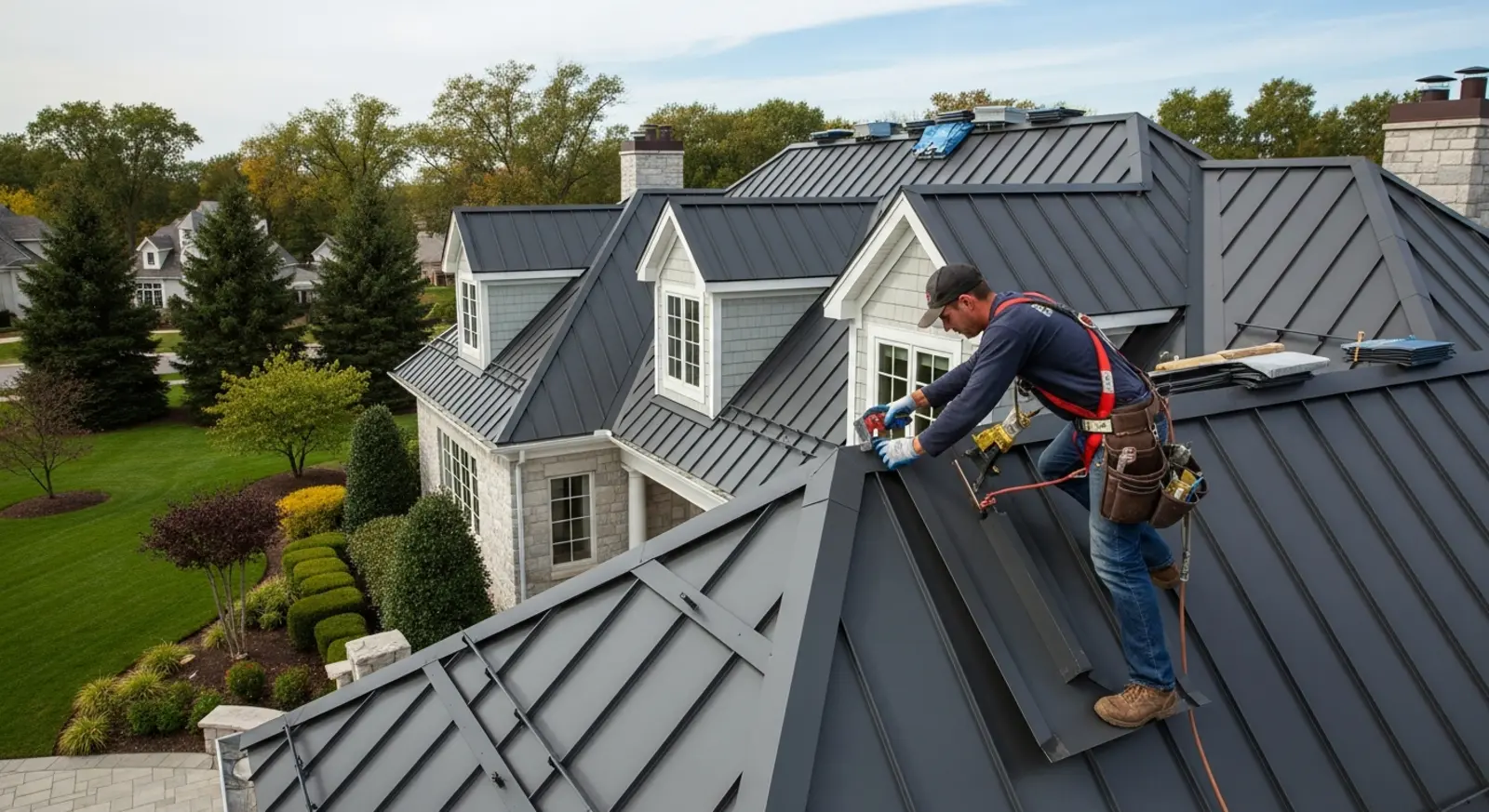
Standing-seam metal roofing in Northern Virginia typically runs $10–$16 per sq ft installed in 2026 — roughly $22,000–$38,000 for a typical home. Exposed-fastener metal panel systems cost less at $6.50–$10 per sq ft, and metal shingles fall in the $9–$13 range. These are typical Northern Virginia ranges; your exact cost is confirmed at a free inspection.
2026 METAL ROOFING PRICES
Metal Roofing Prices by System (2026)
Metal roofing is not a single product — it's a family of systems with meaningfully different costs, lifespans, and appropriate applications. Standing seam is the premium option, with fully concealed fasteners and the longest lifespan. Exposed-fastener systems trade some longevity for a lower entry price. Metal shingles sit between the two in both cost and style. All three significantly outlast architectural asphalt on a per-installation basis.
| System | Per Sq Ft | Typical Lifespan | Best For |
|---|---|---|---|
| Standing seam | $10–$16 | 40–70 years | Long-term ownership, premium homes, steep pitches |
| Exposed fastener | $6.50–$10 | 20–30 years (with fastener maintenance) | Agricultural, commercial, budget metal option |
| Metal shingles | $9–$13 | 30–50 years | Traditional home aesthetics with metal durability |
Typical Northern Virginia ranges for planning purposes only. Final pricing confirmed at your free inspection. Prices vary with roof size, pitch, complexity, and decking condition.
LONG-TERM VALUE
Metal vs Asphalt: The 50-Year Math
The sticker price comparison between metal and asphalt is misleading without a timeframe. Metal costs more today. Over a 50-year horizon, the economics often flip.
An architectural asphalt roof at the middle of the Northern Virginia range costs roughly $12,500 installed. Asphalt lifespans in the mid-Atlantic climate run 20–25 years under normal conditions — meaning a homeowner with a 50-year ownership horizon replaces the roof at least twice more after the initial installation: three installations at $12,500 each (not accounting for price increases over time) totals roughly $37,500.
A standing-seam metal roof at $30,000 mid-range lasts 40–70 years. One installation typically covers the same 50-year window. The total cost is roughly $30,000 — about $7,500 less than three asphalt replacements at today's prices.
The caveats matter. Exposed-fastener metal systems require periodic fastener inspection and possible replacement as neoprene gaskets age. Factory-painted metal may need repainting after 30–40 years depending on the coating grade. These maintenance costs are real but modest compared to a full replacement. The math is also highly sensitive to how long you actually stay in the home — for a homeowner selling in 10 years, asphalt is almost certainly the better financial decision.
| Architectural Asphalt | Standing-Seam Metal | |
|---|---|---|
| Typical mid-range install cost | ~$12,500 | ~$30,000 |
| Installations over 50 years | 3 (at years 0, 25, and 50) | 1 |
| Illustrative 50-yr total | ~$37,500 | ~$30,000 |
Illustrative comparison using typical Northern Virginia ranges only — not a quote or offer. Actual costs depend on your specific roof and future price conditions.
WHAT DRIVES PRICE
What Makes Metal Quotes Vary
Two standing-seam quotes on identical homes can differ by $8,000 or more. These are the four variables responsible for most of that gap. For a broader look at how material, pitch, and access affect pricing across all roof types, see our metal roofing service page and full roofing costs in Northern Virginia guide.
Panel profile and gauge
Standing-seam panels come in different seam heights and metal gauges. Thicker gauge steel or aluminum (lower gauge number) is more rigid, dent-resistant, and longer-lived — and costs more. A 24-gauge panel is a meaningfully different product than 29-gauge. Concealed-fastener clips are milled to tighter tolerances than exposed screws, which is part of why standing seam commands a premium over exposed-fastener systems. Spec the gauge in your written estimate so you can compare quotes on identical materials.
Underlayment
Metal roofing requires a high-temperature synthetic underlayment, not standard felt. Standard felt can off-gas and degrade in contact with hot metal panels during summer, shortening its lifespan and reducing the moisture barrier. High-temp synthetics cost more but are the correct material for metal installations. A quote that uses standard underlayment under metal is cutting a corner that will matter within 10 years. Always ask what underlayment is specified.
Roof complexity
Hips, valleys, dormers, skylights, chimneys, and pipe penetrations all require custom flashing details that are significantly more labor-intensive on metal than on shingles. Each transition point has to be precisely measured, cut, and sealed to prevent water intrusion at the most vulnerable spots. A simple gable roof with minimal penetrations can be installed faster and with far less cut waste than an interlocking hip-and-valley system of the same square footage. Complexity is visible in a quality itemized estimate.
Tear-off and decking condition
Tear-off adds $1–$2 per sq ft to any metal installation — necessary to inspect the deck before laying a material that is expected to last 40–70 years. Any soft spots, delamination, or rot found at tear-off must be corrected before panels go on; decking replacement runs $70–$120 per 4×8 sheet installed. These are typical Northern Virginia ranges and genuinely can't be quoted with certainty before the old material is removed. A reputable contractor includes a unit-price decking line in the written estimate so you know the cost per sheet if additional work is needed.
PAYMENT OPTIONS
Financing a Metal Roof
Home-improvement financing up to $250,000 is available through our lending partners — enough to cover even the largest standing-seam projects. A mid-range metal roof financed over time can cost less per month than many car payments — illustrative example, not an offer of credit; actual terms depend on your credit profile and the lender’s current rates.
Checking your rate has no impact on your credit score for most applicants. If the long-term economics of metal make sense for your home but the upfront cost is a barrier, financing is worth exploring before defaulting to a lower-cost material. See full details and get started on our roof financing up to $250,000 page.
Get a Written Metal Roof Estimate
We measure your roof, specify the panel system and gauge, and give you a written itemized estimate — free, no obligation. Call (571) 538-9995 or book online:
Book Your Free InspectionFAQ
Metal Roof Cost FAQs
Is a metal roof worth the extra cost in Virginia? +
For homeowners who plan to stay long-term and want to avoid another replacement in 15–25 years, standing-seam metal typically delivers strong value. It handles Northern Virginia’s high winds, ice damming, and severe hail events better than asphalt. The upfront premium — roughly double or triple the asphalt cost — is offset when one standing-seam installation covers 40–70 years versus two or three asphalt replacements over the same period. Whether it’s the right choice depends on your ownership horizon and budget.
Do metal roofs attract lightning? +
No — metal roofs do not attract lightning more than any other material. Lightning strikes based on height, terrain, and weather conditions, not roofing material. If a strike does occur, metal is non-combustible and conducts the energy dispersively — which is actually safer than combustible materials that can ignite. This is one of the most persistent myths about metal roofing — see our full breakdown of metal roof myths busted, including noise, rust, and heat concerns.
Can metal be installed over old shingles? +
In some cases yes — jurisdictions that allow overlays may permit metal panels over one existing shingle layer, avoiding tear-off costs. The practical concerns are significant: the added weight requires a structural assessment, unevenness in old shingles can telegraph through the new panels, and most metal roofing manufacturers void warranties on installations over existing material. We recommend a full tear-off for any metal roof installation to inspect the deck, correct soft spots, and preserve the manufacturer warranty.
How loud is rain on a metal roof? +
When metal roofing is installed over solid wood decking with a quality synthetic underlayment — the standard residential installation method — rain noise is comparable to asphalt shingles. The structural layers absorb and dissipate the sound effectively. The loud metal roof reputation comes from agricultural buildings where panels attach directly to open purlins with no insulation or interior barrier. On a properly installed residential metal roof in Northern Virginia, most homeowners report no meaningful difference in rain noise compared to their previous asphalt roof.